
Asian Surveying & Mapping
Breaking News
India-Japan looking to deepen economic engagement, eye greater cooperation in chips, space: Suzuki
New Delhi, Oct 4: India and Japan are looking...
Genesys International bags ₹283 crore World Bank-funded contract for Ahmedabad digital twin
The project will map 625 sq km, survey 25...
China launches new remote sensing satellite group
TAIYUAN, Sept. 24 (Xinhua) -- China launched a new...
Ahmad Belhoul Al Falasi to lead UAE delegation at IAC 2026
UAE delegation will bring together government entities, research institutions...
Korea Signs Space Cooperation MOU With Mexico
A path is opening for domestic space companies to...
China’s space diplomacy lifts Pakistani astronaut toward orbit
KARACHI, Sept 28 (Reuters) - Two Pakistani pilots are...
NV5 Global stock expands geospatial reach with $303 million deal
NV5 Global stock is linked to a Quantum Spatial...
EU and Korea deepen cooperation on secure satellite connectivity
Today, the European Commission and the Republic of Korea...
Ghana, Japan explore deeper cooperation in space technology
Ghana and Japan are exploring deeper cooperation in space...
China conducts four launches inside 48 hours as launch options diversify
HELSINKI — China carried out four launches in quick...
  • Jul 8, 2024
  • Comments Off on JAXA Completes Critical Operations Phase for Advanced Land Observing Satellite-4 (ALOS-4) ‘DAICHI-4’ 
  • Feature
  • 4599 Views

July 8th, 2024
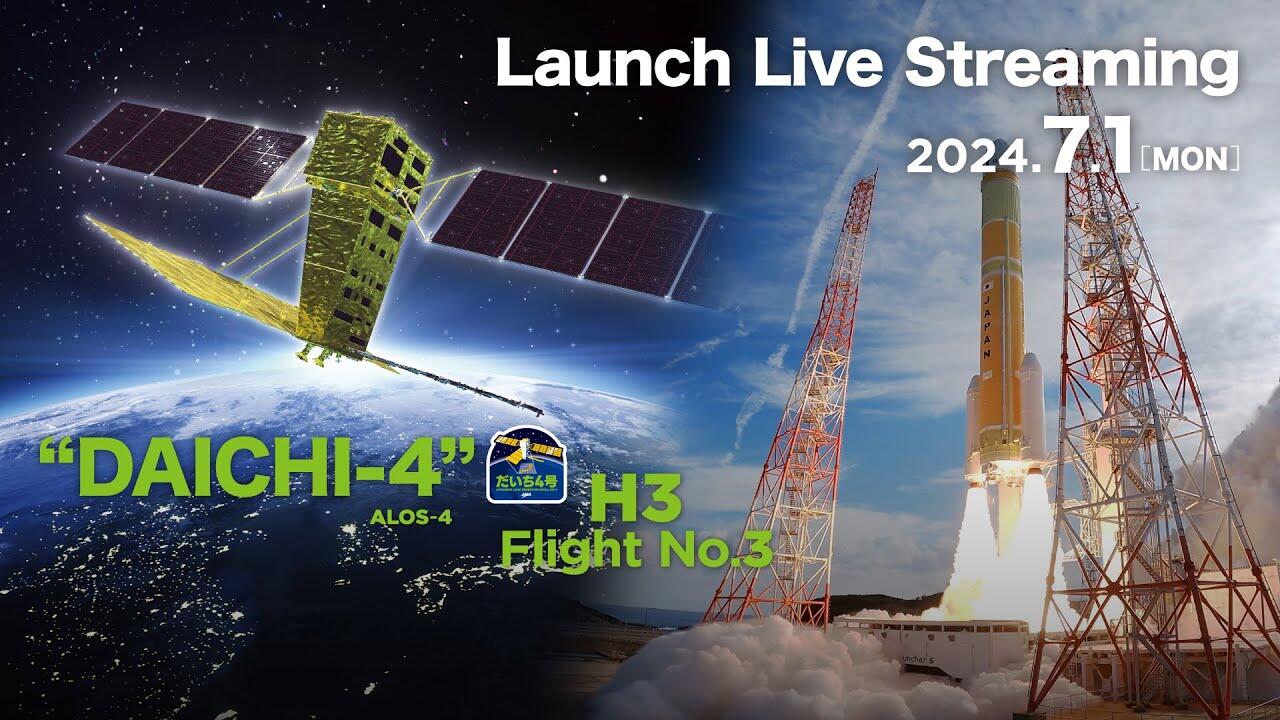
JAXA Completes Critical Operations Phase for Advanced Land Observing Satellite-4 (ALOS-4) ‘DAICHI-4’ 

On July 3, 2024, the Japan Aerospace Exploration Agency (JAXA) advanced the Commercial Removal of Debris Demonstration (CRD2) Phase I project, under which the demonstration satellite Astroscale’s ADRAS-J successfully captured images of space debris, a non-cooperative target, through “fixed-point observation.” These images have been released by Astroscale Japan Inc. 

The “fixed-point observation service” is one of four services that JAXA requires for Phase I of CRD2. This service involves observing the target debris from a fixed point in the target’s orbital coordinate system and providing continuous images of the target with the required image quality and data volume. 

Image Credit: JAXA