
Asian Surveying & Mapping
Breaking News
Etihad Cargo completes transportation of UAE-built space mission probe from UAE to the United States
With the probe’s design, build and testing now complete,...
Europe space chief heads to Gulf as bloc looks beyond US
Europe space chief heads to Gulf as bloc looks...
UK aims to launch space junk relocation mission in 2029
The UK is to use giant robotic claws to...
ISRO’s GSLV rocket carrying navigation satellite lifts off
NVS-03 is the third satellite in next generation navigation...
Ethiopia Prioritises National Geospatial Data Infrastructure in New Strategy
The review aimed to build an evidence-based foundation for...
Russia Says It Will Launch Tanzania’s First Earth Observation Satellite in March 2027
Russia says it will launch Tanzania’s first Earth observation...
South Korea Tests First Indigenous Hypersonic Missile
South Korea conducted its first test-firing of an indigenously...
UAE space economy grows 27.1% to $1.5 billion
Findings also recorded an increase in employment across the...
Japan targets 30 rocket launches a year by 2030s
TOKYO -- Japan's economy ministry plans to add new...
China’s LandSpace Launches 10 Satellites to Advance Orbital Computing and Communications
China has launched eight computing satellites developed by ADA...

June 10th, 2021
Singapore Deploys Drones to Monitor Reservoir Water Quality

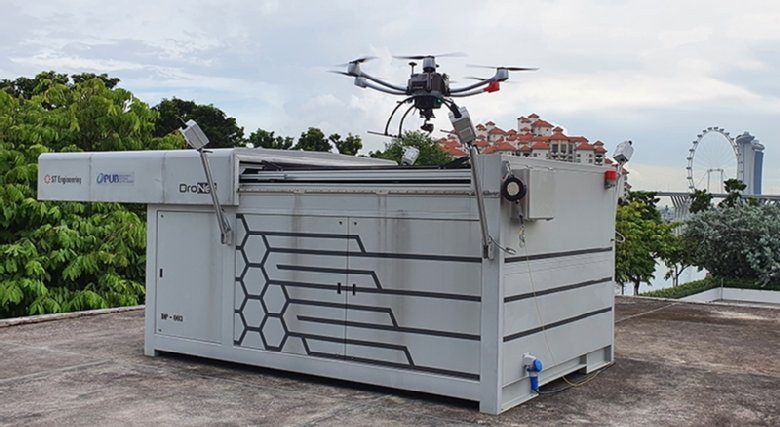
Singapore’s national water agency PUB is deploying autonomous drones at six of the country’s reservoirs to monitor water quality and other activities following trials in 2020.

The Beyond Visual Line of Sight (BVLOS) drones, which can be monitored remotely, are fitted with remote-sensing systems and cameras that can analyze water for turbidity and algae concentration—indicators of water quality—as well as look out for signs of aquatic plant overgrowth.

With some of Singapore’s reservoirs being used for recreational activities such as kayaking and fishing, the drones can also use video analytics to flag concerns, such as anglers fishing in non-designated areas or overcrowding of vessels.

Click here for more information.