
Asian Surveying & Mapping
Breaking News
Japan Eyes Sovereign D2D Satellite Network
Japan plans to select a proposal this month for...
China schedules Long March 10B rocket launch and recovery attempt
HELSINKI — China is set for a debut flight...
BRICS space agencies meet begins in Bengaluru
Heads and senior representatives of the space agencies of...
“India’s growing space ecosystem to drive global collaboration”, says ISRO Chairman V Narayanan after BRICS Space Agencies Meeting
"India's growing space ecosystem to drive global collaboration", says...
UAE aims to see Emirati on Moon in next 10 years, says MBRSC chief
UAE expects to have a presence on the Moon within...
Safran, SatSure partner to develop geospatial intelligence solutions for India
French aerospace giant Safran Electronics & Defense and Indian...
Singapore unveils road map to help develop international business standards and conformance
Singapore has unveiled plans to help develop international standards...
Adelaide University to run space and defence venture launchpad ahead of Australian Space Forum
Adelaide University’s Innovation & Collaboration Centre (ICC) will deliver...
Japan’s H3 rocket returns to space with successful launch after December setback
Japan’s flagship H3 rocket has returned to flight six...
KONGSBERG accelerates seabed mapping developments with Ocean Exploration Trust expedition aboard Exploration Vessel Nautilus
KONGSBERG and the Ocean Exploration Trust (OET) are set...

April 5th, 2021
Australian Nanosatellite Launches from New Zealand

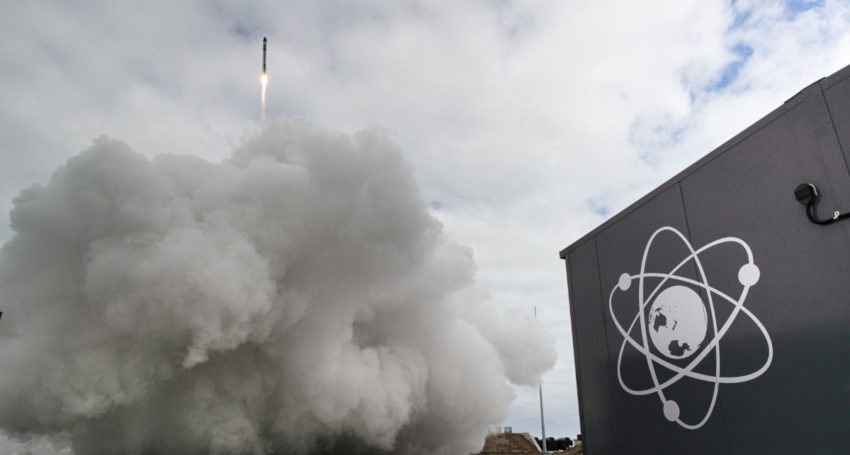
Adelaide-based satellite manufacturer Fleet Space Technologies successfully launched its fifth commercial nanosatellite and is looking to expand production in Australia. Named Centauri 3, the 10-kilogram nanosatellite was launched from New Zealand’s Launch Complex 1 at Mahia Peninsula aboard a Rocket Lab Electron launch vehicle on March 23, 2021.

Centauri 3 will orbit 550 kilometers above the Earth and has begun commissioning and engaging in full operations. The Centauri 3 nanosatellite will be joined by two more this year and a further 16 in 2022 and 2023.

Image Credit: Rocket Lab