
Asian Surveying & Mapping
Breaking News
Palakkad Celebrates as NASA Astronaut Anil Menon Set for First Space Mission
Thiruvananthapuram, July 13, 2026: Kerala’s Palakkad district is set to...
G20 satellite is expected to be launched in 2027: ISRO Chairman
ISRO Chairman V. Narayanan has said that the G20...
Unidentified metal spheres found on Australian beach are ‘debris from a foreign rocket body’, space agency says
The Australian Space Agency says the objects "appear to...
Singapore and Japan sign agreement to strengthen space collaboration
SINGAPORE: The space agencies of Singapore and Japan signed...
Japan space probe skims asteroid in test for planetary defense
A Japanese space probe performed a flyby of a...
Hong Kong-developed ‘Eye for Space’ now operating aboard Tiangong space station
Hong Kong’s first home-grown astronaut, Lai Ka-ying, assembled and...
ISRO conducts first SOLVE ground test important for Gaganyaan missions
Sub-Orbital Launch Vehicle for Experiments (SOLVE) solid motor was...
New 3D Detection Method for Detecting Atmospheric Rivers in Antarctica
Researchers in Japan demonstrate how vertically layered atmospheric rivers...
Uttar Pradesh Govt launches Special Land Measurement Campaign
The Uttar Pradesh government yesterday launched the statewide Digi...
Japan Eyes Sovereign D2D Satellite Network
Japan plans to select a proposal this month for...
  • Jul 4, 2018
  • Comments Off on Philippines Launches First CubeSat into Space
  • Feature
  • 3044 Views

July 4th, 2018
Philippines Launches First CubeSat into Space

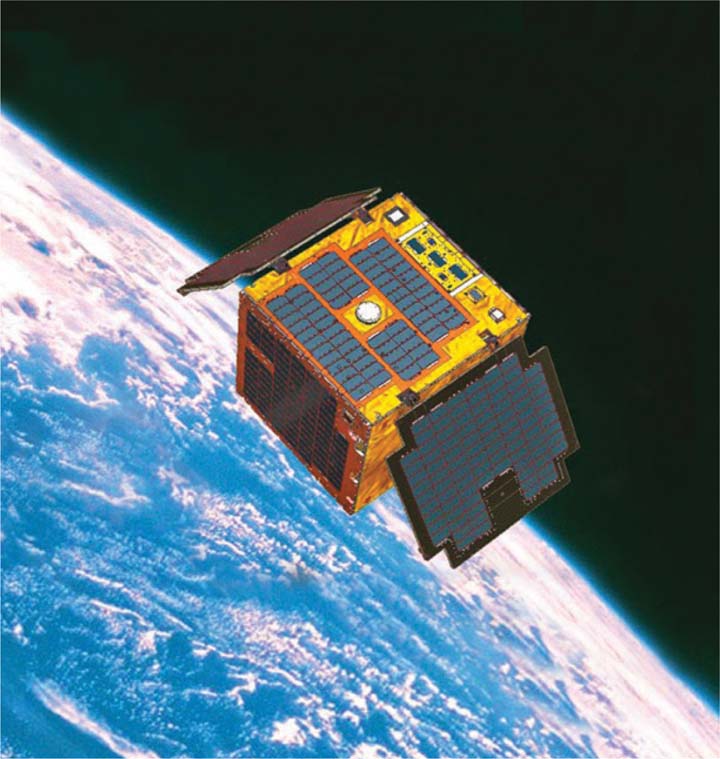
Maya-1, the Philippines’ first cube satellite (CubeSat), was flown into space aboard the SpaceX Falcon-9 CRS 15 rocket launched on June 29, 2018, from Cape Canaveral, Fla.

Measuring 10 cubic centimeters and weighing about 1 kilogram, the satellite aims to collect data from ground sensor terminals and pass them on to a ground control system. Maya-1 also carries an automatic packet radio service digipeater, enabling it to communicate with ham radios, and it has two cameras to capture images for research purposes.

Inside Maya-1’s body is a low-cost GPS and a device that could measure magnetic fields in space. Maya-1 also can log data corruption incidents due to space radiation.

Click here for more information.