
Asian Surveying & Mapping
Breaking News
ISRO Maps Over 2,000 Glaciers, 3,219 Glacial Lakes in Ladakh for Disaster Management
SRINAGAR: The Indian Space Research Organisation (ISRO) and other...
China Closes the Satellite Gap in Space Race With the U.S.
China aims to match the U.S. as the world’s...
IIT-Tirupati hosts fifth BRICS working group meeting on geospatial technologies
The Indian Institute of Technology-Tirupati (IIT-Tirupati), in collaboration with...
South Korea launches 4th Earth observation satellite from US
South Korea on Tuesday launched its fourth Earth observation...
Korea AeroSpace Administration Unveils K-Space Vision
Agency Will Benchmark European Aerospace Clusters and Explore Joint...
Japan space agency conducts Epsilon rocket engine test after failures
TOKYO - The Japan Aerospace Exploration Agency on Thursday...
UAE to boldly go with programme to boost nation’s expertise in space sector
A programme has been announced to enhance Emirati expertise...
China is building a ‘Mach 26 asteroid hammer’ to strike space rocks before they hit Earth
The Earth revolves in a cosmic system which is...
Nigeria and Benin Strengthen Border Surveillance with Geospatial Technology
The partnership was highlighted during a strategic meeting at...
IIT-Tirupati hosts fifth BRICS working group meeting on geospatial technologies
The Indian Institute of Technology-Tirupati (IIT-Tirupati), in collaboration with...

September 1st, 2011
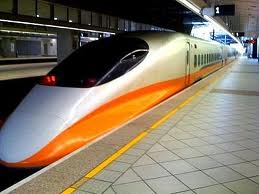
High-Speed Rail + High-Speed WiMax in Taiwan

taiwan rail

The Taiwan Bureau of High-Speed Rail wants to include 4G WiMAX on high-speed trains in that country. Few would argue over the benefis of rail transportation, and even less so if they remain connected to homes and businesses. 

The growth of smartphones and mobile tablets is pushing the need for greater access to a wide variety of internet services that must be fast, available and wherever people go. Taiwan is already one of the world’s most advanced country’s with exceptional internet services, including a well known smartphone manufacturer.

Since many people commute from distances to their workplaces, the ability to cut a long work day down to size, is helped along through the new infrastructure. But it does not stop there. 

As the boundary between home and work place blurs, it is also happening during a time when buildings and other infrastructure are coming alive with sensors and other devices that connect people to places. 

Putting 4G into trains is a logical step for a society aiming ‘to go digital’ and to connect people to all places at all times.