
Asian Surveying & Mapping
Breaking News
G20 satellite is expected to be launched in 2027: ISRO Chairman
ISRO Chairman V. Narayanan has said that the G20...
Unidentified metal spheres found on Australian beach are ‘debris from a foreign rocket body’, space agency says
The Australian Space Agency says the objects "appear to...
Singapore and Japan sign agreement to strengthen space collaboration
SINGAPORE: The space agencies of Singapore and Japan signed...
Japan space probe skims asteroid in test for planetary defense
A Japanese space probe performed a flyby of a...
Hong Kong-developed ‘Eye for Space’ now operating aboard Tiangong space station
Hong Kong’s first home-grown astronaut, Lai Ka-ying, assembled and...
ISRO conducts first SOLVE ground test important for Gaganyaan missions
Sub-Orbital Launch Vehicle for Experiments (SOLVE) solid motor was...
New 3D Detection Method for Detecting Atmospheric Rivers in Antarctica
Researchers in Japan demonstrate how vertically layered atmospheric rivers...
Uttar Pradesh Govt launches Special Land Measurement Campaign
The Uttar Pradesh government yesterday launched the statewide Digi...
Japan Eyes Sovereign D2D Satellite Network
Japan plans to select a proposal this month for...
China schedules Long March 10B rocket launch and recovery attempt
HELSINKI — China is set for a debut flight...
  • May 19, 2026
  • Comments Off on NASA Analysis Shows Irreversible Sea Level Rise for Pacific Islands 
  • Feature
  • 338 Views

May 19th, 2026
NASA Analysis Shows Irreversible Sea Level Rise for Pacific Islands 

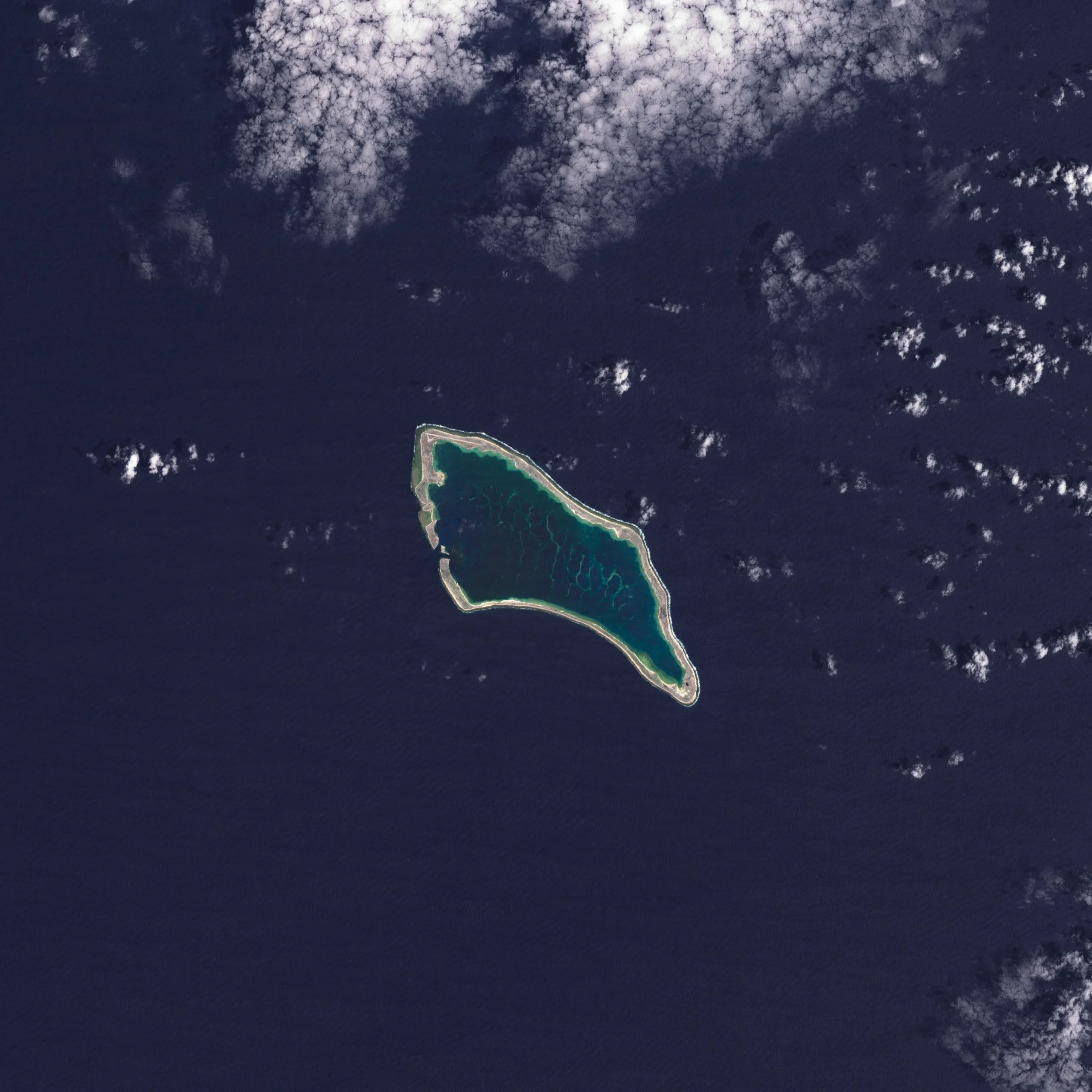
In the next 30 years, Pacific Island nations such as Tuvalu, Kiribati (pictured) and Fiji will experience at least 6 inches (15 centimeters) of sea-level rise, according to an analysis by NASA’s sea-level change science team. This amount of rise will occur regardless of whether greenhouse gas emissions change in the coming years. 

The sea level change team undertook the analysis of this region at the request of several Pacific Island nations, including Tuvalu and Kiribati, and in close coordination with the U.S. Department of State. 

In addition to the overall analysis, the agency’s sea-level team produced high-resolution maps showing which areas of different Pacific Island nations will be vulnerable to high-tide flooding—otherwise known as nuisance flooding or sunny day flooding—by the 2050s. Released on Sept. 23, 2025, the maps outline flooding potential in a range of emissions scenarios, from best-case to business-as-usual to worst-case. 

Image Credit: NASA Earth Observatory