
Asian Surveying & Mapping
Breaking News
From drones to space tech, Japan looks to startups to strengthen its defences
Tokyo is stepping up efforts to harness dual-use technologies...
South Korea’s Space Agency Seeks 47% Budget Hike for 2027; Regular Nuri Launches, Lunar Lander Development to Begin
The Korea AeroSpace Administration (KASA) has proposed a 2027...
Space42 launches Future Spacers Programme to develop UAE space talent
Space42, the UAE-based AI-powered SpaceTech company, has launched the...
US, China arm for space warfare: hunter satellites and orbital weapons
Amid the rapidly-evolving field of military space operations, Beijing...
ISRO Puts India’s First Geo Imaging Satellite In Orbit, PM Modi Hails EOS-05 Launch Aboard GSLV-F17
The Indian Space Research Organisation (Isro) successfully launched EOS-05,...
China releases first nationwide geometric benchmark imagery, setting a unified ‘spatial scale’ for satellite remote sensing
China's Ministry of Natural Resources has released its first...
India to have its own space station by 2035, says ISRO chairman
Speaking at the 14th convocation ceremony of IIT-BHU, ISRO...
Isro will not make any launch vehicle, all tech to be handed to private sector
IN-SPACe chairman Pawan Goenka said Isro is moving launch...
North Korea fires ballistic missiles as US-South Korea drills near end
South Korea has condemned North Korea’s launch ⁠of more...
Orbitworks ships UAE-built Altair-1 to US ahead of October launch
Abu Dhabi-based satellite company Orbitworks has shipped Altair-1, the...
  • Jan 21, 2020
  • Comments Off on TSUBAME Sets Guinness World Record
  • Feature
  • 1381 Views

January 21st, 2020
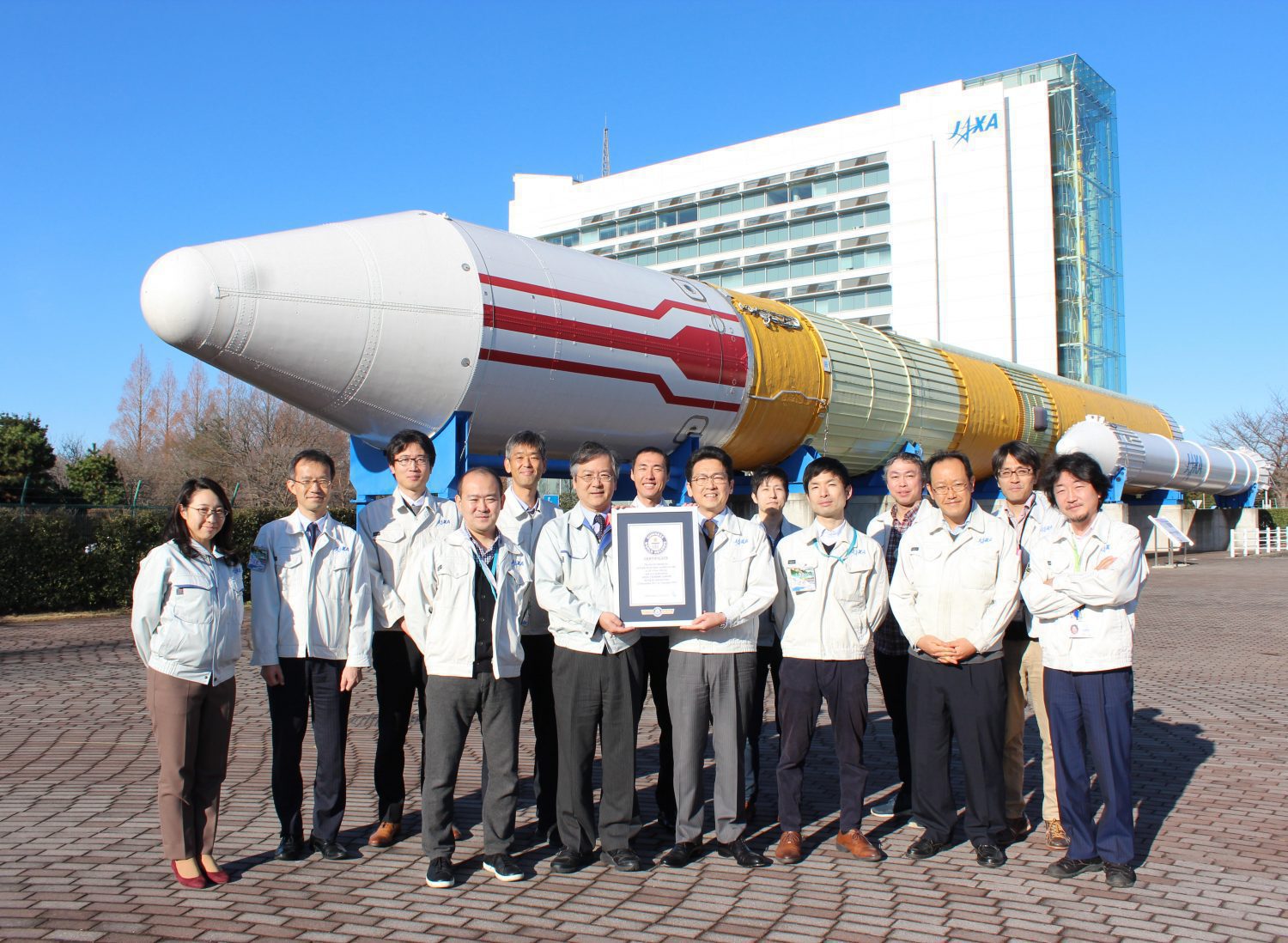
TSUBAME Sets Guinness World Record

Japan Aerospace Exploration Agency (JAXA) announced that its Super Low Altitude Test Satellite “TSUBAME” (SLATS) was registered by the Guinness World Records as having achieved the “lowest altitude by an Earth observation satellite in orbit.”

With its ion engine, TSUBAME was able to capture high-resolution satellite images despite the atmospheric drag and density of atomic oxygen present in super-low altitudes. It maintained seven different orbital altitudes, with 167.4 kilometers being the lowest. At this altitude, TSUBAME used both its ion engine system and gas-jet thrusters.