
MINNEAPOLIS – East View Geospatial is enthusiastic to announce the expansion of analytic services in the South China Sea for foundation data and satellite imagery.
The South China Sea serves as an international crossroads of culture, commerce and security interests, with 20 percent of the world’s population residing within 100 kilometers from the region. Contested by multiple nations with territorial claims, the South China Sea harbors natural resources, as well as geopolitical significance. About one-quarter of the world’s traded goods are delivered through the Strait of Malacca, which is located in the South China Sea between the Malay Peninsula and Sumatra.
East View now holds authoritative geospatial foundation data from affected states in the South China Sea. East View analysts derive territorial claims and other insights from atlases, nautical and aeronautical charts, administrative maps, and topographic, geological and geophysical series produced by national mapping agencies.
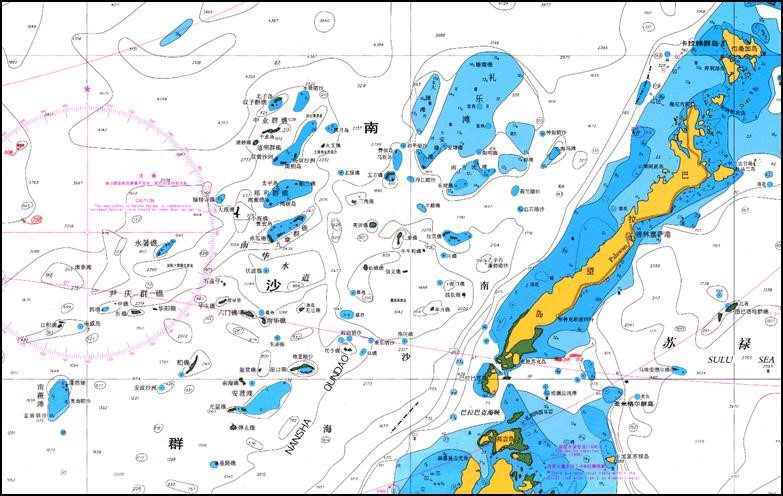
Above: Chinese-produced nautical chart showing Spratly archipelago and Philippine island of Palawan
In addition to authoritative foundation data, with increased satellite data feeds from imagery providers, East View can now image the South China Sea on a consistent basis. From the Fiery Cross Reef, to the Strait of Malacca, analysts can detect change for area hotspots or monitor the region as a whole at preferred intervals.
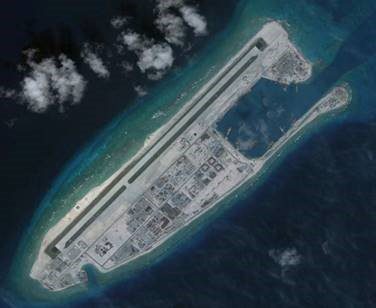
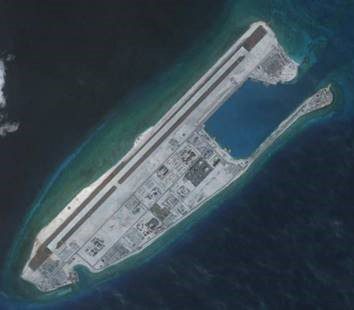
Above: Satellite imagery of the developments on Fiery Cross Reef from January 2016 (left), and April 2016 (right).
With access to real-time and archived imaging data, East View Geospatial also offers anticipatory and trend analysis services. Analysts can monitor a specific object of interest, such as a group of Filipino fisherman or Chinese vessels, and analyze past imagery of similar targets to anticipate new developments and future possibilities.
To find out how to acquire South China Sea foundation data, analysis, and imagery, visit http://geospatial.com or contact your East View representative.
About East View
East View was founded in 1989 and is headquartered in Minneapolis, Minnesota, USA. East View is comprised of East View Information Services (www.eastview.com), East View Geospatial (www.geospatial.com) and East View Map Link (www.evmaplink.com). East View maintains thousands of supplier/publisher relationships throughout the world for maps and geospatial data and Russian, Arabic and Chinese-produced social and hard science content. East View manages a data center, library and warehouse in Minneapolis where it hosts and stores dozens of foreign language databases, hundreds of thousands of maps and atlases and millions of geospatial, Russian, Chinese and Arabic metadata records.
